dIFFERENT mEANINGS is an ongoing investigation into how signs produce and transform meaning, across language, images, and visual knowledge. The project traces the structures through which signs operate, how they refer, distinguish, classify, or index, and how meaning shifts with context, multiplies through use, and changes through relation.
dIFFERENT mEANINGS moves between visual investigations and found material, between sketches and specimens, observing signs as relational structures within networks of use and reference. Meaning appears as a negotiation between form, context, and interpretation. This explorative practice feeds into type design, where conceptual inquiry becomes form. Each typeface is a proposal for a sign system that negotiates rhythm, presence, and expression, translating these questions into operative tools whose forms are never neutral.
dIFFERENT mEANINGS exists as a state of attention, for signs, for forms, and for the spaces between them, and as a developing archive in which semiotics and type design are interwoven, where thinking about signs becomes the act of shaping them.
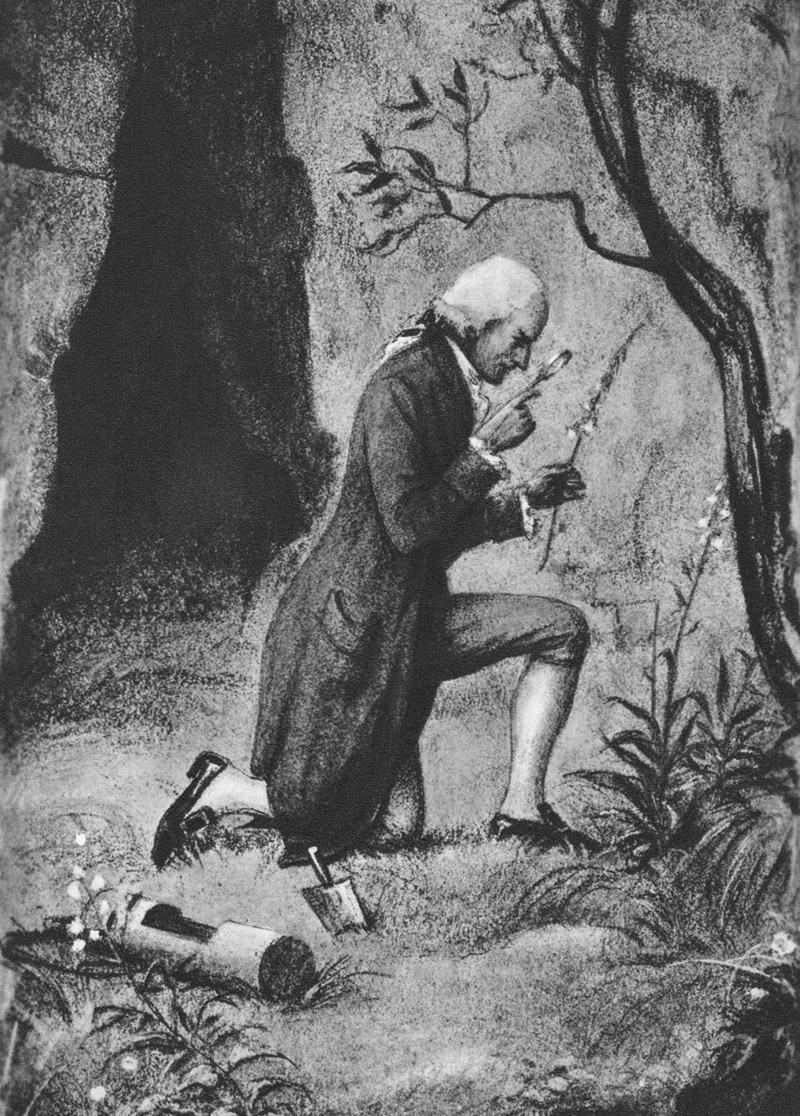
Windelband, Wilhelm; Günther, Siegmund: Geschichte der antiken Naturwissenschaft und Philosophie. Nördlingen: C.H. Beck, 1888.
A
Ambiguity
Signs are ambiguous when their meaning refers to several distinct contents and their interpretive range shifts according to context. Ambiguity may be regarded as a deficiency of linguistic signs or employed as a deliberate method.
C
Cognition
Knowledge attained through penetrating a state of affairs. Cognition may arise from experience, perception, or information and leads to the emergence of new, sometimes surprising connections from an altered perspective.
Combination
Mental or physical connection of two or more elements from a given set into a unified whole. Selection of particular fragments may be guided by logical or aesthetic considerations.
Concept
Linguistic signs that designate things in the world. These designations are grounded in the conventions of a given language and confer explicit meaning upon the things they name.
Connotation
Secondary sense that encompasses the non-referential features and meanings of a sign. In this respect it differs in function from the denotation of the sign. Its content depends on subjective experience and situational context.
Context
Framework that shapes the meaning of a sign, reflexively influencing its own significance according to situation and usage. Meaning of words emerges only through their combination with other words within a specific context.
Convention
Conventions are agreements upheld by collective human consensus. Without them, language itself would not exist.
D
Definition
Interpretation, localization, and delimitation of an expression in distinction from other expressions. Definition of a sign is established both through its content, sense, and meaning, and through its conceptual scope and denotation. To define the concept of "definition" is to define par excellence.
Denotation
Actual and conventional core meaning of a sign or statement, as established by convention, which points directly to the sense of the designated referent. It constitutes the precise core of a sign and its unambiguous determination.
Designation
Representative concept of an object, expressed through linguistic or symbolic signs; the objectification of an idea. When this representation takes the form of words, it constitutes a naming. Designation encompasses both the sign itself and the act of sign-giving.
E
Experience
Acquisition of knowledge through one or more recollections of prior perceptions and representations, continuously modified and expanded through new experiences in a process of self-reflection.
Expression
Sensuously perceptible dimension of a linguistic sign that refers to or names particular objects. Such signs may be spoken or written. An expression calls forth the designated entity, along with its contents and meanings, in the consciousness of the recipient. As the signifier, it stands on the opposite side from the content level of the sign.
F
Fragment
Broken-off piece or partial element of a greater whole, often existing in relation to other equivalent parts. A fragment always implies the absence of at least one other fragment and the absence of totality.
G
Gesture
Every written form carries the trace of the hand or tool that produced it, even when that origin has been abstracted or systematised. In this sense the letterform is an index, pointing back to an act of making and connecting the static form to the dynamic process from which it emerged.
H
Hypothesis
Logical yet unproven or unverifiable assumption or statement, serving as an instrument for the attainment of knowledge.
I
Icon
Signs that, in their ideal form, refer to their object by virtue of perceptible acoustic or visual resemblance or intrinsic features are called icons. Between sign and referent there exists a direct relation of likeness.
Image
Naturally or artificially produced image of a real existing object. Images constitute the meaning of both linguistic and non-linguistic signs.
Imagination
Active process of vividly and concretely envisioning something sensuous that is not presently given. This process of imagining is directed neither necessarily toward the past nor toward the future. Imagination expands thought by engaging the sensory richness of experience without binding it to conceptual fixation.
Index
Signs in which a real, physical relation exists between sign and referent are called indexes. Their sign-character is grounded in a causal connection whose constitutive nature lies in a duality with an object in temporal and/or spatial relation. On account of this dualism, both the index and its referent must possess individual existence. Their relation, and its meaning, are determined only through the relevant context of utterance.
Intention
Thought directed by reflection toward a course of action to be carried out in the future, intended to evoke one or more insights, actions, or reactions.
Interpretation
Process of explicating, deciphering, and understanding the meaning and sense of given signs. Given the objective and subjective duality inherent in any sign, the aim of interpretation is to render one reading more probable than another.
L
Language
Convention-based system of sounds and written symbols through which words can be formed and sentences composed. This system enables the articulation and constitution of connections within the human relation to the world. Words acquire their meaning through their relations to and differences from other linguistic expressions within these structures.
Legibility
Whether a letterform can be recognised and distinguished is not an inherent property of a typeface but a relation between form, perception, and situation. What is legible in one context may be opaque in another, making legibility a negotiation between formal properties and the conditions of reception.
Letterform
A letter's visual shape, as it exists within a sign system, operates simultaneously as a readable unit within a word and as a visible form in space, carrying two registers of meaning at once, the semantic, which points toward language, and the perceptual, which addresses the eye directly. The tension between these two registers is a condition that typographic practice inhabits.
M
Meaning
Content evoked by a linguistic or objective sign. Every sign carries at least one meaning that holds independently of subjective conceptions. Meaning of a sentence may differ from the meanings of its individual components and in turn confer new meaning upon the linguistic signs within it. Due to the inherent dualism of signs, linguistic expressions may share the same meaning while possessing different senses.
Mental Representation
Pictorial and representational state of consciousness that imagines objects of the world and places them in a relation of depiction. Mental representations are purely subjective constructs that can be developed, elaborated, and continually re-envisioned.
Model
Schematic or preliminary rendering that conveys an idea or impression of something. Linguistic signs function as models for mental images.
P
Perception
Cognitive process, occurring both consciously and unconsciously, that receives and processes sensory stimuli and impressions of the world. Perception may be deliberately manipulated in order to produce ambiguity or parallel sensations.
Pragmatics
Branch of semiotics whose subject of inquiry is the relations between signs and their users.
Proportion
Within a letterform and the system it belongs to, proportion determines the relationship between parts within a single letter, between letters within a word, and between a typeface and the space it occupies. It is a structuring principle that produces harmony, tension, or disruption within a typographic system.
R
Reference
Signs function as indicators by pointing to something other than themselves. This act of pointing may be active or passive.
Referent
Real, existing object or state of affairs to which a sign, sequence of signs, or linguistic expression refers. The referent serves as the object of reference for the denotatum.
Relation
Connection between one or more real or constructed signs, ideas, or things within a given system. Relations may be unilateral or reciprocal and are typically embedded within a larger system of designations.
Representation
Substitution or depiction of one object by another. The present object serves as the sign-like presence of what is absent.
Rhythm
Recurring patterns of intervals, weights, and movements structure the experience of reading. Rhythm is not a decorative property of type but a temporal and spatial principle that organises the passage through a sign system, determining how the eye moves, where it pauses, and how meaning accumulates across a sequence of signs.
S
Semantics
Concerned with the relationship between linguistic signs and their meanings, semantics examines the relation between signs and what they designate, that is, between signifier and signified.
Sense
Given semantic content of a linguistic sign, whose import may vary according to context, with multiple senses potentially associated with a single expression.
Sentence
Structure composed of multiple words, whose governing rules are established by the conventions of a given sign system.
Sign
Anything perceptible to the senses, whether linguistic or material, may be called a sign. A sign, by its very existence, always points beyond itself to ideas of something, which are themselves in turn only signs of ideas.
Signified
Mental representation designated by a sign; that which the signifier represents on the level of content. As content level, the signified refers to an existing referent.
Signifier
Sensuously perceptible, designating sign that is directed toward what is designated in a non-physical state. A signifier is the expressive dimension of a sign, functioning as its material body and pointing toward its sense.
Spacing
Intervals between letters, words, and lines are not the absence of form but active participants in the construction of meaning, regulating proximity and distance, grouping and separation. Because signs acquire meaning through their relations to other signs, the space between them is as structurally significant as the signs themselves.
Statement
Typically linguistic formulation, in the form of a written or spoken sentence, that articulates a state of affairs, a supposition, a thesis, or an opinion with a specific or deliberately unspecific intention. Whether a statement is true or false does not affect its actual sense.
Structure
Arrangement and organization of interconnected signs and/or objects that stand in relation to one another within a constructed system.
Symbol
Arbitrary sign whose relation to its referent is based neither on resemblance nor on causality, but rests solely on established convention.
Synonym
Linguistic expressions and signs that share the same meaning-content while differing in their sense-relation to other expressions.
Syntactics
Concerned with the formal relations between signs within a system, syntactics operates independently of their meanings and of the users of those signs.
Syntax
Structural and rule-based system governing the combination of elementary signs within a natural or artificially constructed sign system.
System
Natural or artificially constructed arrangement that connects individual components of the same or different kinds, placing them in unilateral or reciprocal relations to one another.
U
Unambiguity
Unlike ambiguity, unambiguity describes an assignment in which a sign corresponds precisely to a single, exactly defined meaning.
Usage
Meaning of a sign emerges through its use and through its interaction with other signs. Through particular usage within a specific context, connections between different signs are established, situating each sign's self-referential existence in relation to others.
W
Weight
Visual mass and presence are expressive dimensions of the sign rather than purely formal attributes. Weight produces hierarchy, emphasis, and contrast within a typographic system, shaping the conditions under which certain meanings become more prominent than others.
Word
Objects and states of affairs make up the world. To communicate about them with others, one may point to them, draw them, or name them. Naming occurs through words, sequences of written characters or sounds that, in particular configurations, form a sign whose meaning is grasped only through the conventions of a language and must be learned. Words are signs for things and act as signifiers of signifieds.
dIFFERENT mEANINGS is the semiotic and type design practice of Tobias Hönow who is a german graphic designer and founding partner of H A N D. Besides his studio work, he teaches typography and researches the relation between language and type in various media and materials.
Sources
B Bertram, Georg W.: Sprachphilosophie zur Einführung: Junius Verlag, Hamburg 2017 C Cassirer, Ernst: Philosophie der symbolischen Formen. F. Meiner Verlag, Hamburg 2010 E Eco, Umberto: Zeichen. Einführung in einen Begriff und seine Geschichte. Suhrkamp, Frankfurt a. M. 1977 F Flusser, Vilém: Die Schrift. Hat Schreiben Zukunft?. Fischer Taschenbuch, Frankfurt a. M. 1993, Frege, Gottlob: Über Sinn und Bedeutung. Reclam Verlag, Stuttgart 2019 H Heidegger, Martin: Sein und Zeit. De Gruyter, Berlin 2008, Hirsch, Eric D.: Prinzipien der Interpretation. Wilhelm Fink, München 1972, Husserl, Edmund: Logische Untersuchungen. F. Meiner Verlag, Hamburg 2013 J Jannidis, Fotis: Texte zur Theorie der Autorschaft. Reclam Verlag, Stuttgart 2000 M Mersch, Dieter: Medientheorien zur Einführung. Junius Verlag, Hamburg 2006, Mersch, Dieter: Zeichen über Zeichen. Texte zur Semiotik von Peirce bis Eco und Derrida. DTV 1998, Morris, Charles William: Grundlagen der Zeichentheorie. Fischer Taschenbuch 1988 P Peirce, Charles Sanders: Elements of Logic. Collected Papers, 1932.